
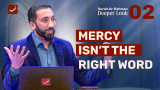
In this episode, Ustadh Nouman Ali Khan, along with Zaid and Bushra, explore the opening of Surah Ar-Rahman by reflecting on why the surah begins with Ar-Rahman as a powerful standalone declaration, and why the first action attributed to the Most Merciful is that He “taught the Quran.”
Key points of this episode:
What is the linguistic and semantic depth of the word Ar-Rahman?
Why does Allah say “He taught the Quran” instead of “He sent down the Quran”?
What is the scope of the Quran’s instruction is it limited to Muslims, or is it a universal invitation to all of humanity?
What rhetorical wisdom lies in making Ar-Rahman a standalone verse?
How does pairing divine mercy with divine instruction redefine our perception of revelation?
This episode clarifies that the Quran is not presented as a distant text simply delivered from above, but as a carefully and compassionately taught guidance a manifestation of Allah’s mercy in action. The act of teaching itself becomes a sign of divine care, nurturing humanity step by step.
Surah Ar-Rahman recitation recorded and provided by Qari Ibraheem Bakeer – [ @Maqamat_with_Bakeer ]
https://youtube.com/@maqamat_with_bakeer?si=-r1KAAhlbA0xsgVD
—
Want to go deeper with our Surah Ar-Rahman Urdu series? Explore more ways to continue your learning at https://bayyinah.com/ramadan2026.
Make the most of your Quran study this Ramadan with our new Revealed app: A mushaf experience for reading, understanding and reflecting on the Quran: https://byna.tv/revealed2.
Join the conversation on Bayyinah TV here: https://byna.tv/21. Connect with other Urdu-speaking students inside our community forum, share reflections and benefit from meaningful discussion as you journey through the surah together.
During Ramadan, 15% of your membership goes toward sponsoring tablets for orphans preloaded with our Quran apps, turning your learning into lasting impact.
Already benefiting? Gift someone a Bayyinah TV membership and let them experience Surah Ar-Rahman with you: https://byna.tv/gift1.


Recent Comments